
ERP

A brief introduction
What does ERP mean?
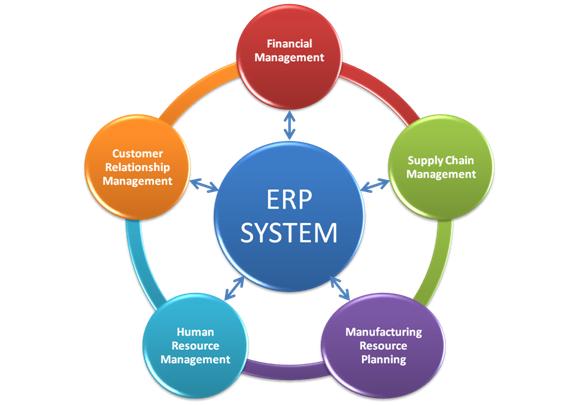
ERP stands for Enterprise Resource Planning. provides a large, integrated information system that supports most enterprise processes and data storage needs across the entire organization.
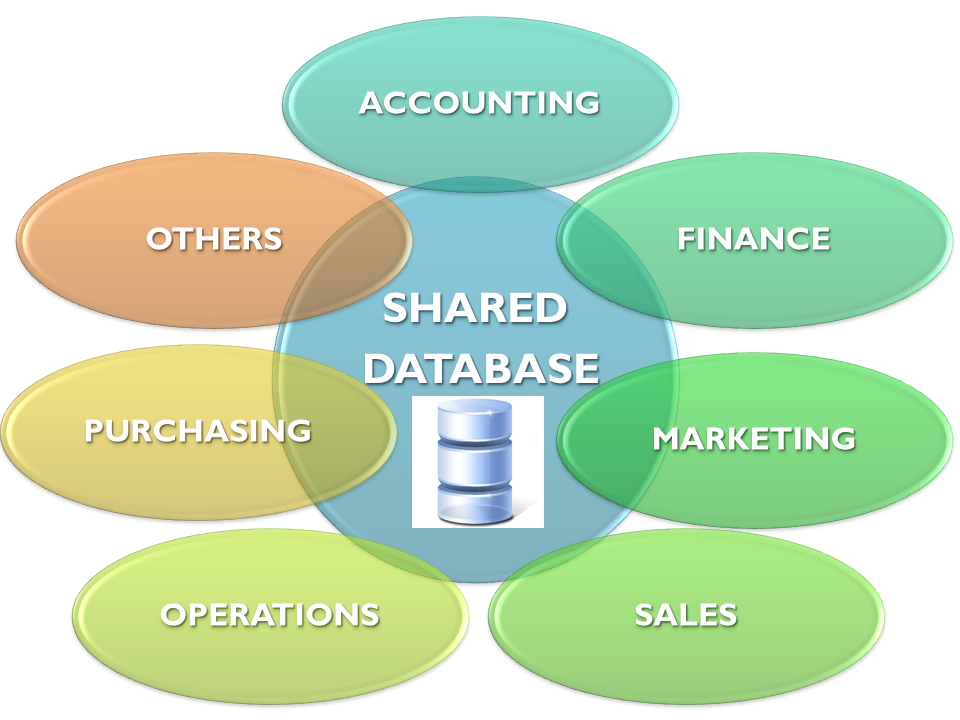
ERP systems combine most, if not all, of the information neeed for a company in a single system, often replacing dozens of different systems used in different departments and applications.
It is a system that provides a complete linkage of all functional areas of a business. ERP allows manufacturing to see new orders as soon as marketing or sales enters them into the system. In turn, sales can continuously track the status of an order. Sourcing has visibility into the materials that manufacturing needs, and distribution has data on when and where materials and orders need to be delivered. Accounting gets all financial data as soon as the relevant transaction occurs.
There are now many ERP solutions to choose from and it is important to select one which fits the overall needs of a company.
ADVANTAGES
There are a number of powerful advantages to ERP. It has been used to solve a number of problems that have plagued large organizations in the past. At the same time, it is not without a number of disadvantages. Being able to weigh the two will allow your company to decide if this solution will properly meet your needs.
It should first be noted that companies that fail to utilize systems such as ERP may find themselves using various software packages that may not function well with each other. In the long run, this could make the company less efficient than it should be.
There are a number of processes that a company may need to integrate together. One of these processes is called design engineering. When a company is in the process of designing a product, the process of actually creating it is just as important as the end result. ERP can be useful in helping a company find the best design process.
Another area where ERP can be useful is order tracking. When a company receives orders for a product, being able to properly track the orders can allow the company to get detailed information on their customers and marketing strategies. If different software packages are being used, this data may not be consistent.
Perhaps one of the most important advantages of ERP is its accounting applications. It can integrate the cost, profit, and revenue information of sales that are made, and it can be presented in a granular way.
ERP can also be responsible for altering how a product is manufactured. A dating structure can be set up which can allow the company to be informed of when their product should be updated. This is important, because it will allow the company to keep better track of their products, and it can allow the products themselves to be produced with a higher level of quality.
Another area where ERP can be an indispensable tool is the area of security. It can protect a company against crimes such as embezzlement or industrial espionage.
DISADVANTAGES
However, with all the advantages that ERP offers, there are a number of disadvantages as well.
Perhaps one of the biggest disadvantages to this technology is the cost. At this time, only large corporations can truly take advantage of the benefits that are offered by this technology. This leaves most small and medium sized businesses in the dark. A number of studies have shown that the biggest challenges companies will face when trying to implement ERP deals with investment. The employees must be continually trained on how to use it, and it is also important for companies to make sure the integrity of the data is protected.
ERP has a number of limitations. The success of the system is fully dependent on how the workers utilize it. This means they must be properly trained, and a number of companies have attempted to save money by reducing the cost of training. Even if a company has enough money to implement ERP, they may not be able to successfully use it if they do not have enough money to train their workers on the process of using it. One of the biggest problems with ERP is that it is hard to customize. Very few companies can effectively use ERP right out of the box. It must be modified to suit their needs, and this process can be expensive.